
The retina is a thin, light-sensitive layer at the back of your eye. It works like a camera film. When light enters your eye, the retina captures it and sends signals to your brain so you can see clearly.
If the retina gets damaged, your vision can become blurry, distorted, or even lost. In many cases, early diagnosis and treatment can protect your eyesight. That’s why understanding common retina diseases is very important.
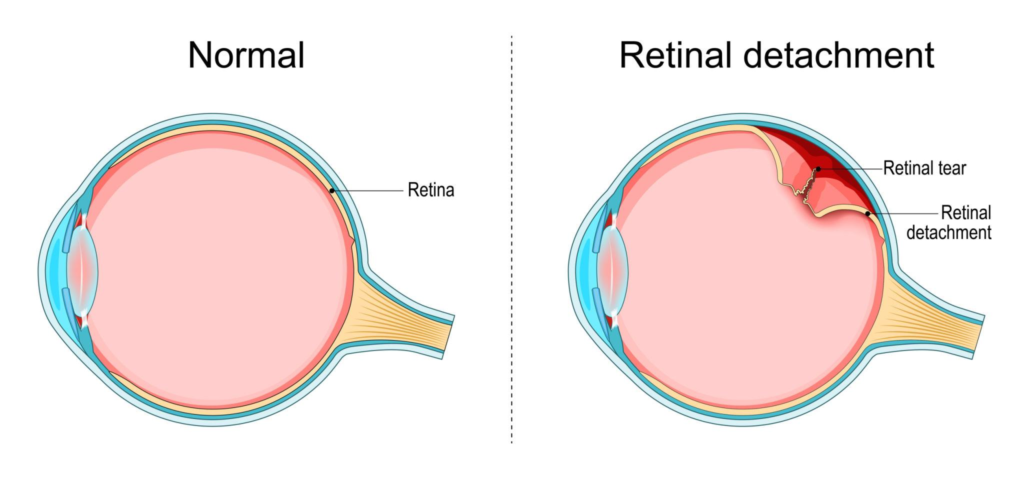
1. Retinal Detachment
What happens?
The retina pulls away from the back wall of the eye. When this happens, it cannot work properly.
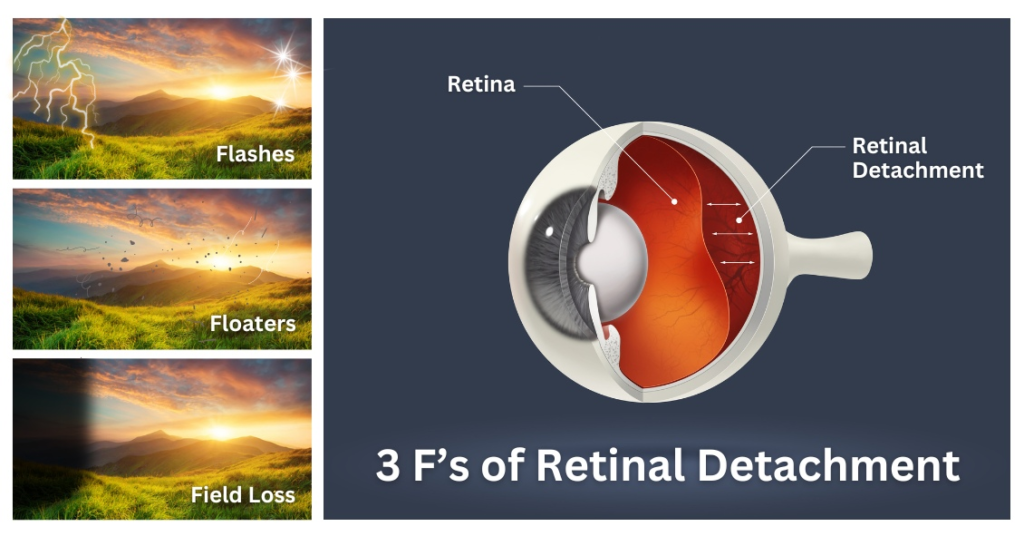
Warning signs:
- Sudden flashes of light
- Sudden increase in floaters (small black spots moving in your vision)
- A dark shadow or curtain covering part of your sight
- Sudden blurred vision
What should you do?
This is an emergency. Do not wait. Immediate treatment, usually surgery, can help save your vision if done early.
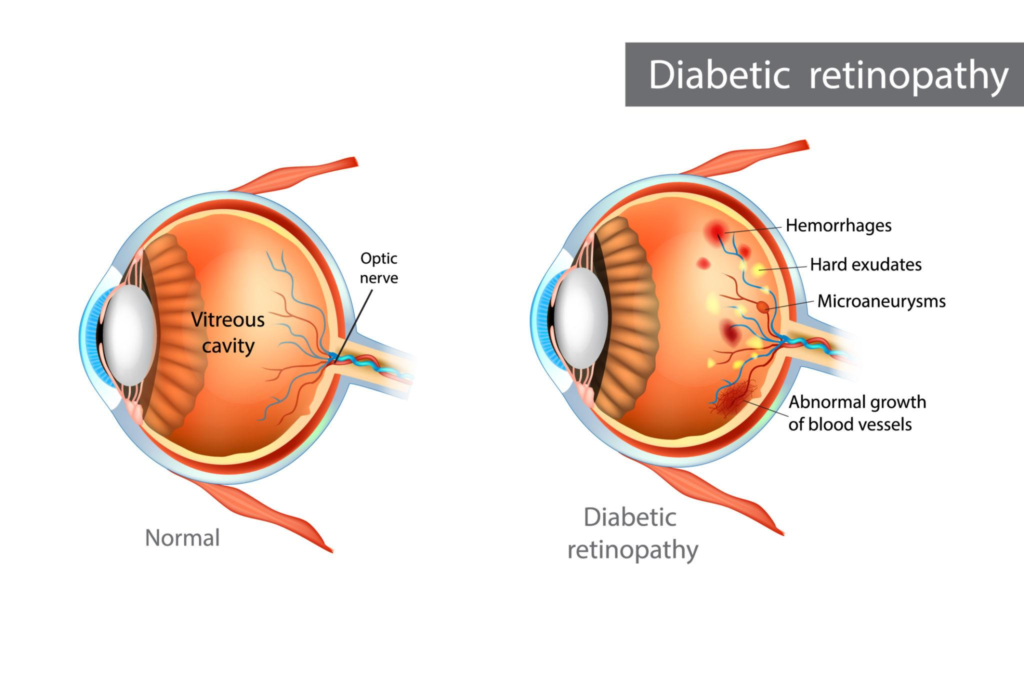
2. Diabetic Retinopathy
What happens?
In people with diabetes, high blood sugar can damage the tiny blood vessels in the retina.
Who is at risk?
Anyone with diabetes, especially if blood sugar levels are not well controlled.
Symptoms:
- Blurry vision
- Dark spots
- Difficulty seeing at night
- No symptoms in early stages
Here’s what many people don’t realize: you can have serious retinal damage and still see clearly at first.
Why check-ups matter:
If you have diabetes, a yearly retina examination is very important, even if your vision feels normal.
Treatment options may include:
- Eye injections
- Laser treatment
- Surgery in advanced cases
Early treatment can prevent vision loss.
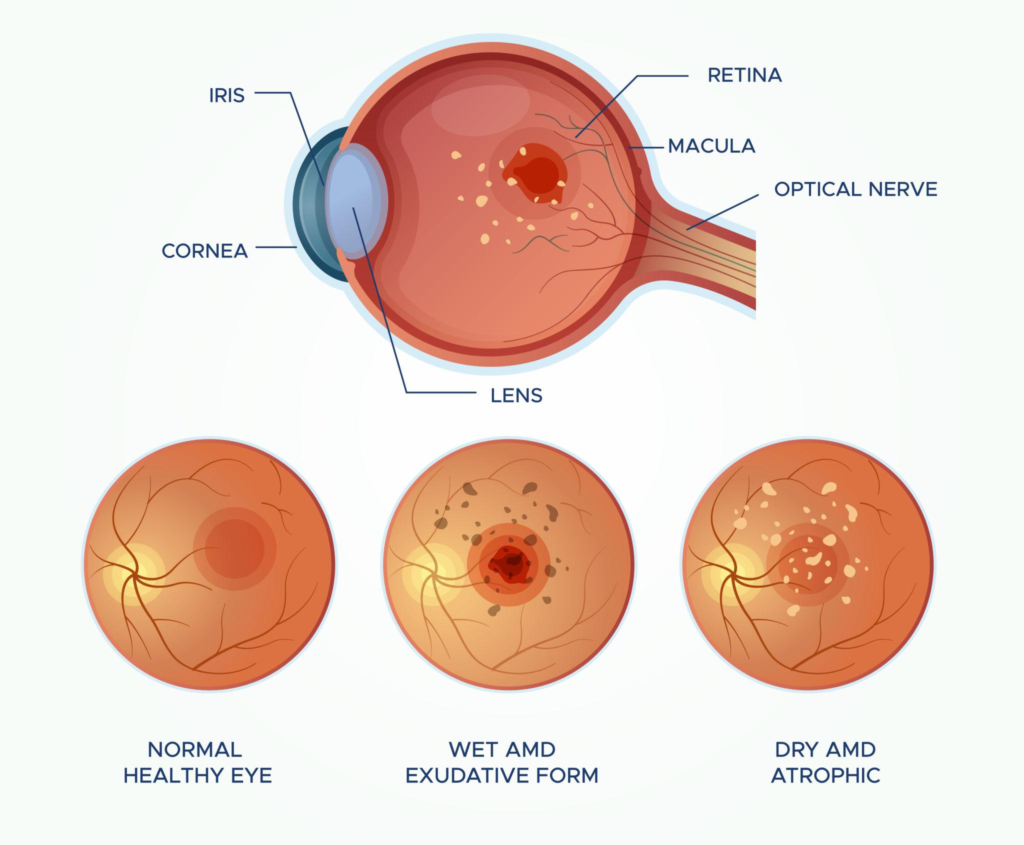
3. Macular Degeneration
This condition affects the central part of the retina called the macula. It is more common in people above 50 years of age.
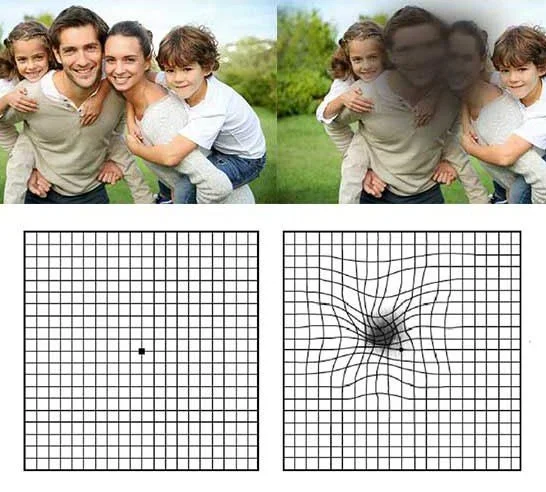
Symptoms:
- Straight lines appear wavy
- Difficulty reading
- A dark or blurred spot in the center of vision
There are two types:
- Dry type– usually slower and more common
- Wet type– more serious and needs quick treatment
The wet type is often treated with special eye injections to protect central vision.
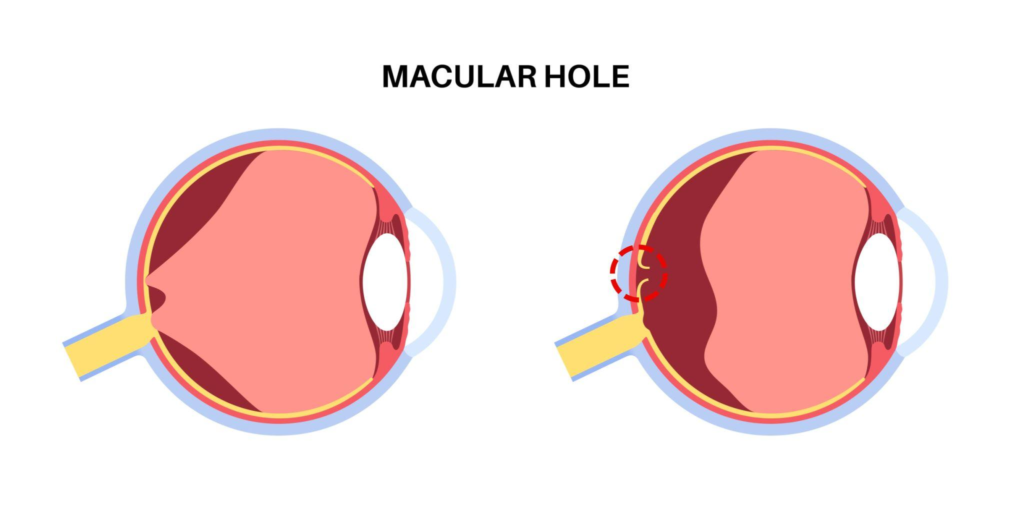
4. Macular Hole and Macular Pucker
Macular Hole:
A small opening forms in the center of the retina.
Macular Pucker:
A thin membrane forms on the retina, causing it to wrinkle.
Symptoms:
- Blurred central vision
- Distorted or wavy vision
- Trouble reading
Mild cases may only need monitoring. More serious cases may require surgery to improve vision.
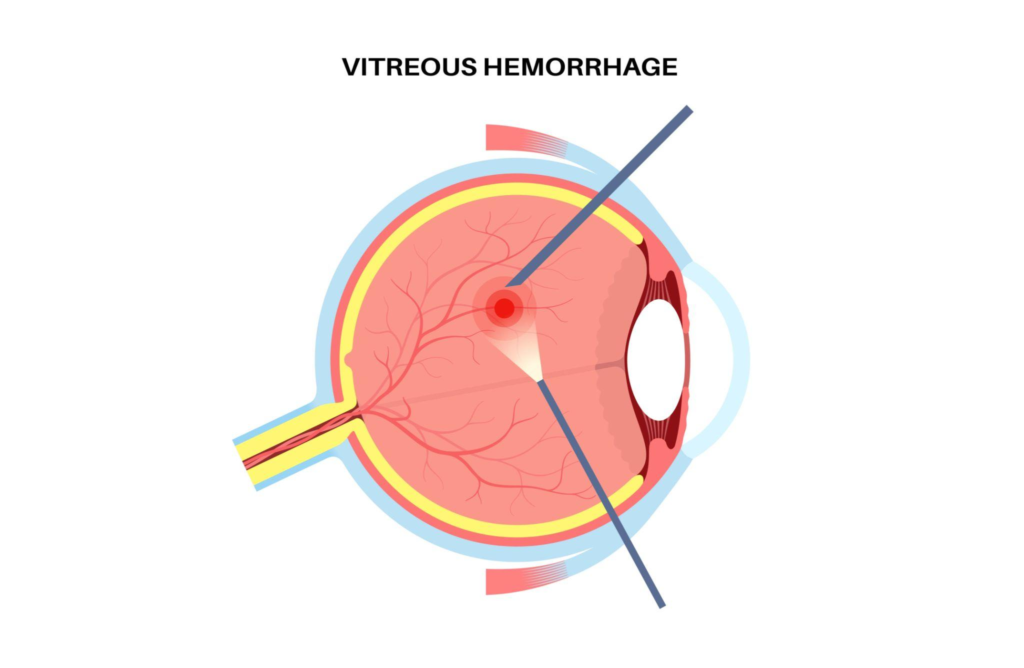
5. Vitreous Hemorrhage
What happens?
Bleeding occurs inside the eye. This is common in people with diabetes or after an eye injury.
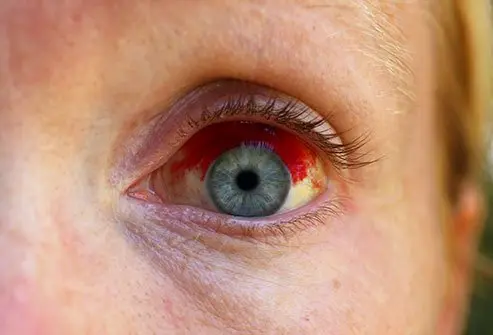
Symptoms:
- Sudden dark floaters
- Cloudy or reddish vision
- Sudden drop in vision
This condition needs urgent evaluation to find the cause and start treatment quickly.
6. Retinopathy of Prematurity (ROP)
This condition affects premature babies. Abnormal blood vessels grow in the retina.
Why early screening is important:
Premature babies must have timely eye examinations. Early treatment can prevent serious vision problems or blindness.
When Should You See a Retina Specialist?
Do not ignore these symptoms:
- Sudden flashes of light
- Sudden floaters
- Wavy or distorted vision
- Dark shadow in your vision
- Sudden loss of vision
Even if the symptoms seem small, it is always safer to get your eyes checked.
The Most Important Message
Many retina diseases:
- Do not cause pain
- Do not show early symptoms
- Can silently damage your eyesight
You should have regular eye check-ups if:
- You have diabetes
- You are above 50 years
- You have high blood pressure
- There is a family history of eye disease
Early diagnosis and timely treatment can protect your vision.
Your eyesight is precious. If you notice any change in your vision, consult an eye specialist without delay.